
How Dam Removal Can Help with the Climate Crisis
By Judi Uthus, Public Engagement Specialist, California Trout
For more about this project, please join our May 31 chapter call.
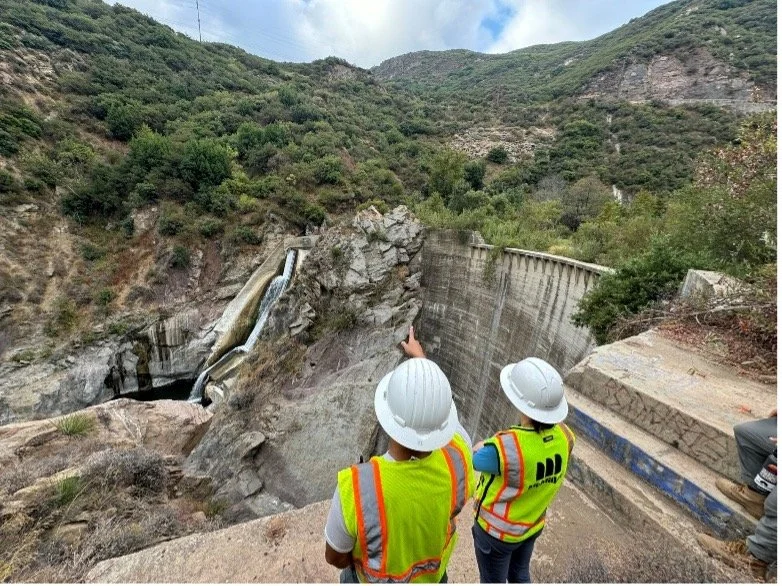
Photo courtesy of Moffatt & Nichol Engineering.
California has thousands of public and private dams, ranging from small earthen structures to massive reservoirs rising hundreds of feet high. Built largely during the early 20th century, these dams were considered engineering feats providing electricity, water storage, and flood control. Today, however, many have exceeded their intended lifespans and are part of a rapidly aging infrastructure. Research from the UC Davis Center for Watershed Sciences shows that dams also come with significant environmental costs--degrading watershed ecosystems, harming wildlife populations, and even posing risks to public safety. As a result, the ecological and economic benefits of removing outdated dams outweigh the costs of keeping them in place.
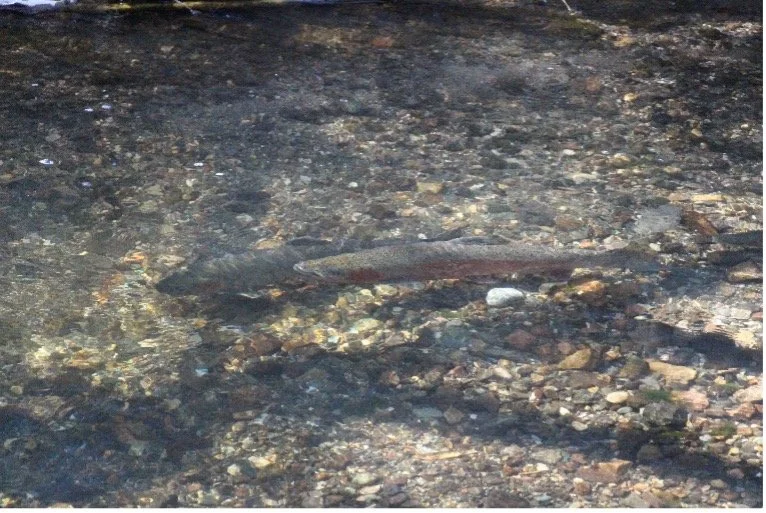
Southern California Steelhead. Photo credit: Mark H. Capelli
The sharp decline of anadromous salmon and steelhead populations across California is one example of the impacts related to dams. For decades, dams and other barriers have fragmented aquatic migration corridors, preventing anadromous fish from reaching the spawning grounds they depend on for survival. Southern California steelhead were once abundant in local rivers, including Malibu Creek, and were a keystone species across the Santa Monica Mountains, holding deep cultural significance for local tribes. Although federally listed as endangered since 1997, their numbers have continued to fall, prompting California Department of Fish & Wildlife to add the species to its own endangered list in 2024 for additional protection. Restoring the state’s free‑flowing waterways is now considered essential to ensuring the survival and recovery of this iconic species.
The Malibu Creek Ecosystem Restoration Project
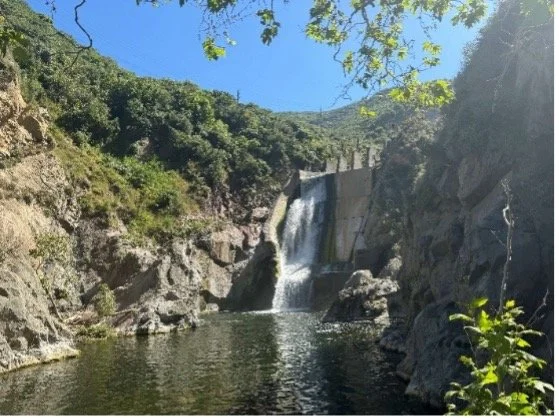
Rindge Dam. Photo credit: R.J. Van Sant, State Parks.
One local dam is now in the process of removal. Located three miles upstream from the Pacific Ocean in Malibu Creek State Park, is the 100-year-old Rindge Dam. Built in 1924 – 26 by Malibu’s Rindge family, the dam filled up with sediment by 1947 and abandoned in 1967. For over a century, the 100-foot-tall concrete wall has been an insurmountable barrier for local wildlife, particularly southern steelhead, which have been unable to migrate upstream to their ancestral breeding grounds. Rindge Dam has also blocked 800,000 cubic yards of sediment to naturally flow downstream and replenish Santa Monica Bay beaches.
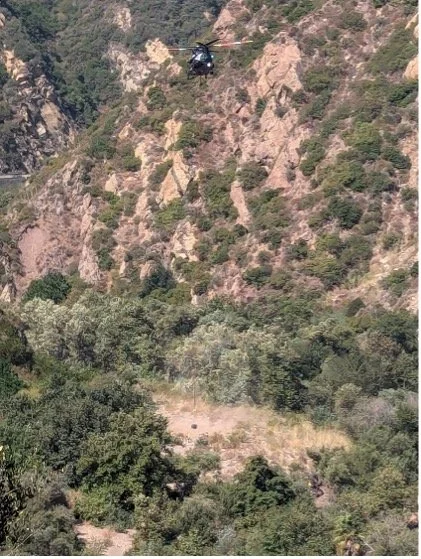
With Malibu Canyon’s narrow and severely limited access, a Boeing CH-47 Chinook helicopter was required to transport specialized equipment to the dam site for geotechnical studies. Supplies air dropped to the site included a drill rig, small excavator, front end loader, metal bridge, side-by-side ATV, tools and other supplies.
Photo courtesy of Moffatt & Nichol Engineering
After two decades of feasibility studies by the U.S. Army Corps of Engineers, the Malibu Creek Ecosystem Restoration Project (MCERP) is now in the pre‑construction, engineering, and design phase. California State Parks (State Parks) is leading a team of consultants, project partners, and Tribal partners, to identify the best approach for dam removal, redistribution of the trapped sediment, and the modification or removal of eight additional upstream barriers to fully reconnect the 18‑mile waterway.
“Removing the dam will not only support habitat restoration and species recovery but also creates opportunities to reuse the sediment trapped behind the dam to nourish local beaches. This sediment would have naturally reached the coast if the dam had not blocked it. By repurposing the material and avoiding landfill disposal, we also anticipate significant cost savings for the project,” said R.J. Van Sant, project lead for State Parks.
Slated for completion in 2035, the MCERP will restore a key watershed and wildlife corridor of the Santa Monica Mountains. Malibu Creek not only supports aquatic species, such as southern California steelhead and southwestern pond turtle, but is also a vital corridor to terrestrial species. Mountain lion, bobcat, and deer rely on the creek corridor for cover, shelter, and food and to move between the coast and mountains in this remarkably biodiverse watershed that is largely under public ownership.
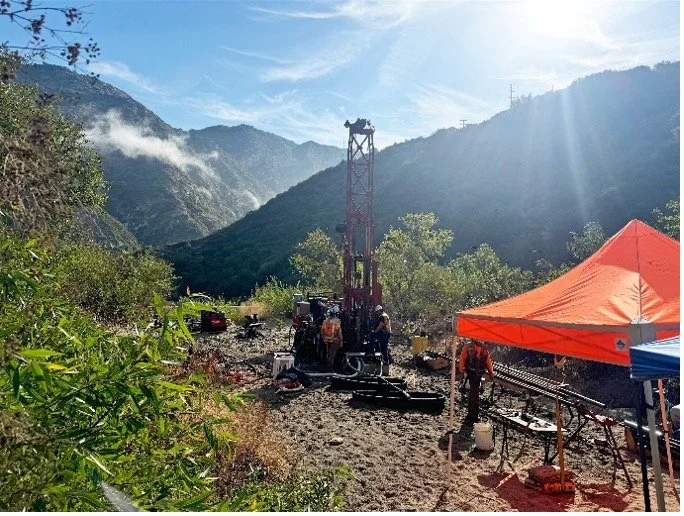
Geotech Project Team onsite collecting soil samples at multiple depths from the 800K cubic yards of trapped sediment behind dam. Photo courtesy of Moffatt & Nichol Engineering
Community Science Program
With a landscape-scale restoration project taking place within urban Los Angeles, the MCERP provides valuable opportunities for public outreach and education on protecting urban-rural environments. CalTrout is leading the public engagement effort, which features a Community Science Program. Along Malibu Creek, seven photo monitoring sites allow the public to help document the changing physical conditions during the watershed’s transformation. This documentation will help establish a robust database throughout the restoration process and continuing stewardship of the watershed.
How do we know dam removal is worth the investment? Following the removal of four dams along the Klamath River in 2024, monitoring results just after one year show thousands of Chinook salmon pushing deep into newly reopened habitat—some reaching more than 360 river miles from the ocean into their Upper Klamath Basin spawning grounds for the first time in over a century.
To learn more about the Malibu Creek Restoration Project and the Community Science Program, visit restoremalibucreek.org.
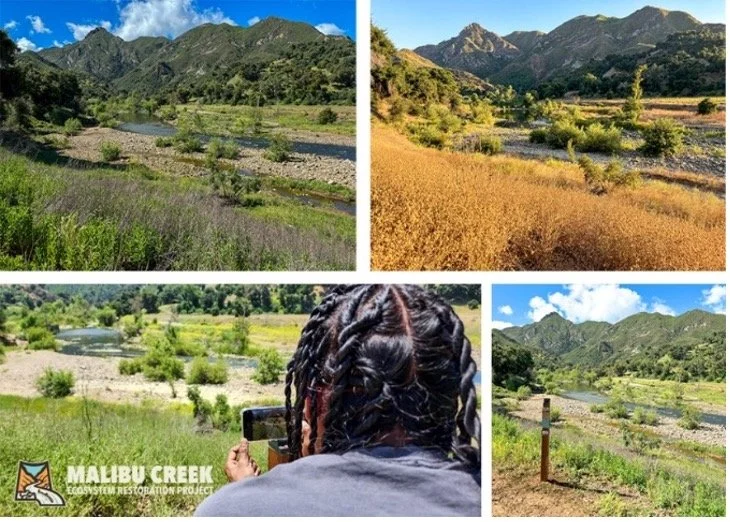
Community Science monitoring site at Malibu Creek State Park